
Consultants and advisors with an audience somewhere between 1,000 and 10,000 end up here for different reasons: some watch a prospect go quiet the moment a price comes up, some just dread the sales call itself, and some get real interest that fades into silence before anyone books. All of it points to the same fix: stop selling in a conversation and in 1:1 calls, and let a page do it instead.
What a One-Page Storefront is, and why the pricing behind it works
A One-Page Storefront is exactly what it sounds like: one page on Sociala carrying your offers, each with a price already attached, so a visitor can read, decide, and pay without ever getting you on the phone. The page does the part of the job you dread most, saying a number out loud, so you never have to.
Three price tags go up by Friday: $19, $49, and $99. Each one asks for a different amount of you, not a different amount of time. The $19 tag is a template, something you hand over once and it's done. The $49 tag is a teardown, where you look at something the client already made and tell them what to fix. The $99 tag is an async Q&A, real written answers to real questions, with no call involved. Same expertise, three different amounts of you.
Say ten people land on the page this week. Three buy the $19 template, that's $57. Two go for the $49 teardown, another $98. One buys the $99 Q&A, adding $99 more. Altogether, that's $254, and not one call, pitch, or "let me think about it" in the whole week.
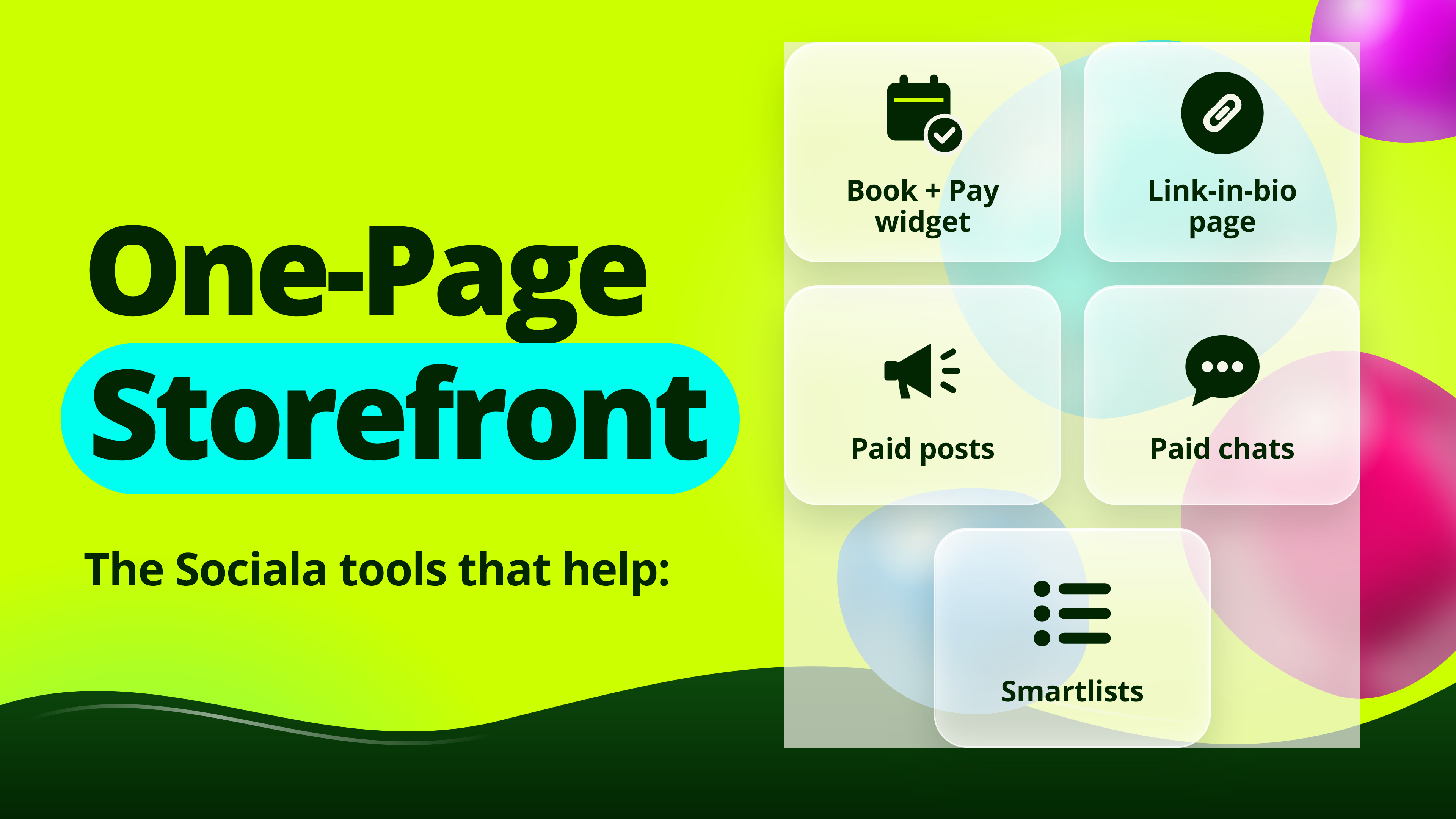
So how do you actually put this into practice?
Your first steps
1. List what already exists.You probably have more to sell than you think, you just haven’t priced it yet. If you walk every new client through the same intake process, or explain the same three mistakes on every call, that’s not just conversation, it’s a product waiting to be recorded. Pair one paid session that people can book and pay for directly (not a sales call) with one recorded or written piece built from that repeat advice, and put both on a single Sociala page. If you don’t have the recording yet, don’t wait until it’s polished: record your screen for ten minutes and walk through the fix as if one specific client were sitting across from you. A rough, specific answer to one real problem sells better than a tidy, general resource you spent three weeks perfecting, because the person buying it has that exact problem.
2. Put up three price tags.Three tiers work because buyers want different things from you, and different prices let each one choose instead of you guessing. The $19 template is something a person can use immediately, such as a checklist, a script or a fill-in-the-blank plan, and it’s priced low because you aren’t part of the delivery. The $49 teardown means someone sends you something they already built, like a page, a pitch or a plan, and you record your reaction and fixes. It costs more because you’re looking at their specific work. The $99 async Q&A is the closest thing to your time, with real written answers to real questions and still no live call. Write and price all three, then publish them the same day. You’re not opening a shop with inventory to manage, you’re making three things visible that used to live only in your head, and once they’re live, the page states the price for you.
3. Aim one Reel a week at it.A storefront nobody sees is just a page sitting there, so the traffic has to be as steady as the store. Pin the same link wherever your bio lives, then send one piece of content at it every week. It shouldn’t be a pitch, just something that shows the kind of problem your $19, $49 or $99 offer solves: the teardown process, the exact mistake a template fixes, or a smaller version of the question the Q&A covers. The page then lays out what each tier includes and lets people buy on their own time, so the weekly post only has to get them there, not talk them into anything.
4. Move buyers into a room you own.A one-time sale is worth $19, $49 or $99, but the same buyer, kept somewhere you can keep talking to them, is worth whatever they buy next. Set it up so every purchase drops the buyer into your free Sociala community right after checkout, with no extra step for them and no manual invite for you. That’s where the second sale happens, because people who have already paid you trust you more than a cold follower does, so they’re the first to buy your next template or Q&A slot. Once the room has enough people actually talking, add a paid channel next to the free one. That’s the recurring piece, a smaller standing fee instead of one-off purchases, and it still never asks anyone to get on a call with you.